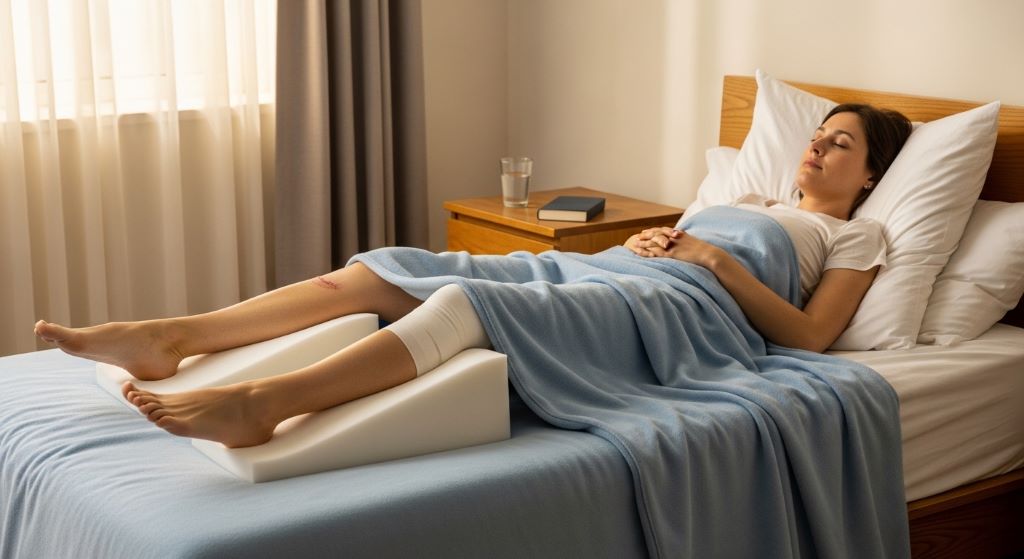
Why Swelling Happens After Surgery
Surgery puts your body through a lot. When a surgeon makes incisions or repairs tissue, your body responds immediately. It sends extra fluid and white blood cells to the affected area. This is a natural healing process. However, it also causes swelling, tightness, and discomfort.
Swelling is most common in the legs, knees, ankles, and feet after orthopedic procedures. Procedures like knee replacement, hip surgery, or varicose vein treatment often lead to significant fluid buildup. This buildup can slow healing. It can also make movement painful and difficult.
The good news is that you have control over how fast the swelling goes down. One of the simplest and most effective tools you can use is a leg elevation pillow. It costs little, requires no medication, and works while you rest.
What Is a Leg Elevation Pillow?
A leg elevation pillow is a specially designed cushion that supports your legs at an elevated angle. Unlike regular pillows, it holds a firm, consistent shape. It keeps your legs raised above the level of your heart. This position encourages fluid to drain away from your legs and back toward your core.
Most leg elevation pillows are made from memory foam or high-density foam. They come in a wedge shape. The angle is usually between 30 and 45 degrees. Some models have a contoured surface to support the natural curve of your legs. Others come with a removable, washable cover for hygiene during recovery.
These pillows are not just for post-surgical use. However, after surgery, they become especially important. Doctors and physical therapists commonly recommend them as part of a structured recovery plan.
How Elevation Reduces Swelling
The science behind elevation is straightforward. Your lymphatic system and blood vessels rely partly on gravity to move fluid through the body. When your legs are flat or hanging down, fluid pools in the lower extremities. Raising your legs reverses this process.
When your legs are elevated above heart level, gravity pulls excess fluid back into circulation. Your body can then filter and redistribute it more efficiently. This is why doctors often tell patients to keep their legs raised as much as possible in the first days after surgery.
Additionally, reduced fluid pressure around the surgical site means less tension on the tissues. This directly supports swelling reduction and makes the recovery environment more comfortable. The less pressure there is on nerves and blood vessels, the more quickly your body can begin repairing itself.
Choosing the Right Leg Elevation Pillow
Not all elevation pillows are the same. Choosing the right one matters for your recovery. Here are the key features to look for:
- Angle: A 30 to 45-degree incline is ideal for most post-surgical patients. A pillow that is too flat will not provide enough lift. One that is too steep may strain your hips or lower back.
- Firmness: The pillow must hold its shape throughout the night. Soft pillows compress under body weight and lose their elevation effect quickly.
- Length: Your pillow should support your full leg, from the back of your knee to your heel. Partial support can create pressure points and actually increase discomfort.
- Cover material: Look for a breathable, moisture-wicking cover. After surgery, your skin may be sensitive. A soft, hypoallergenic cover is a good choice.
- Ease of use: You will be placing and removing this pillow often. Choose a lightweight design that you can manage without assistance.
Therefore, take time before your surgery to research and purchase the right pillow. Having it ready on the day you return home will make a significant difference.
How to Use Your Leg Elevation Pillow Correctly
Using the pillow correctly is just as important as having one. Improper positioning can reduce its effectiveness or even cause strain in other areas.
Start by placing the pillow on your bed or couch in a flat position. Sit down first, then carefully lift your legs onto the pillow. Your heels should rest near the top of the wedge. The back of your knees should rest on the lower, thicker portion. This position keeps your legs in a gentle, supported incline.
Your legs should feel comfortable and relaxed. You should not feel any sharp pressure behind your knees or at your ankles. If you do, adjust the pillow slightly or add a thin folded towel under a pressure point.
Aim to keep your legs elevated for 20 to 30 minutes at a time, several times a day. In the first 48 to 72 hours after surgery, more frequent elevation sessions are especially helpful. As your swelling improves, you can gradually reduce the frequency.
Additionally, elevate your legs while you sleep if your doctor approves. Overnight elevation gives your body hours of uninterrupted drainage. Many patients notice a visible reduction in puffiness by morning.
Combining Elevation with Other Pain Relief Methods
Elevation works best when used alongside other pain relief methods. Together, these approaches create a more complete recovery plan.
Cold therapy is a strong companion to elevation. Applying an ice pack or a cold compress to the swollen area reduces inflammation and numbs discomfort. Use cold therapy for 15 to 20 minutes before or after an elevation session. Always wrap ice in a cloth to protect your skin.
Compression garments are another effective tool. Compression socks or sleeves apply gentle, even pressure to the leg. This prevents fluid from pooling in the tissues. Wearing compression garments during the day and then elevating your legs at night creates a consistent management cycle.
Staying hydrated also plays a role. It may seem counterintuitive, but drinking plenty of water helps your kidneys flush excess fluid from the body. Therefore, keep a water bottle nearby during your recovery.
Light movement, when approved by your doctor, further supports circulation. Short, gentle walks encourage blood flow and prevent the fluid stagnation that worsens swelling. However, always follow your surgeon’s guidelines on when and how much to walk.
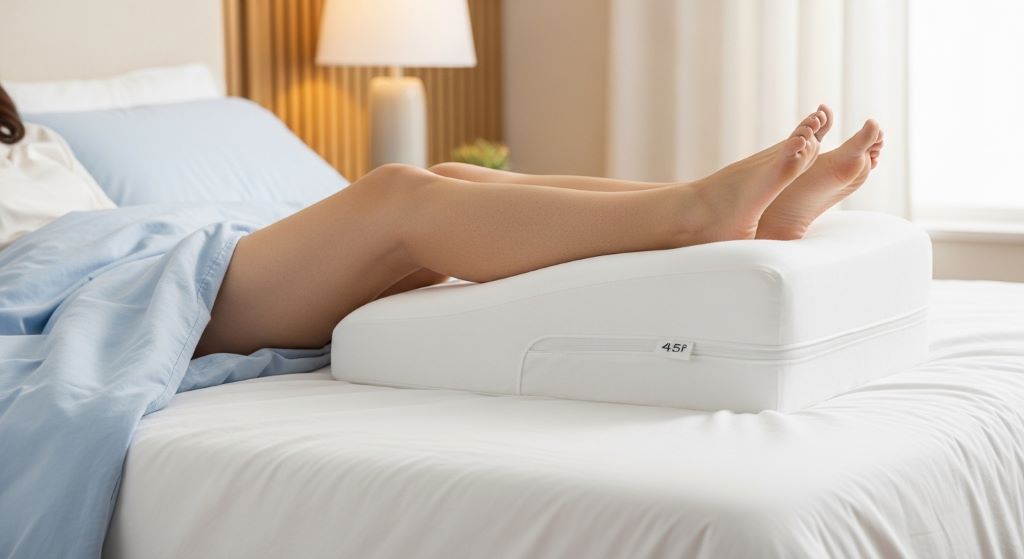
When to Start Using the Pillow
In most cases, you can begin using a leg elevation pillow as soon as you return home from the hospital. Your surgical team will guide you on specific timing based on your procedure.
For knee surgeries, elevation is often recommended immediately. The knee is a complex joint with many blood vessels. Swelling there can be intense and long-lasting without proper management.
For hip surgeries, your surgeon may give specific positioning instructions. Some hip procedures require you to keep the hip at a certain angle. Make sure your elevation position does not conflict with these instructions.
For ankle or foot surgeries, elevation is critical. The foot is the farthest point from the heart. Fluid travels the greatest distance to get back into circulation. Therefore, consistent elevation is especially important for lower leg and foot procedures.
Common Mistakes to Avoid
Even with the right pillow and good intentions, some common mistakes can reduce the benefits of elevation.
Elevating only the ankles is a frequent error. If only your ankles are raised but your knees and thighs are flat, fluid cannot drain effectively from the upper leg. Your entire leg must be supported and inclined.
Using too many soft pillows instead of a proper wedge is another issue. Standard pillows flatten out and shift during sleep. You may wake up with your legs flat on the mattress, having lost hours of beneficial elevation.
Stopping elevation too soon is also common. Patients often feel better after a few days and assume they no longer need the pillow. However, internal swelling can persist long after surface symptoms improve. Continue using the pillow for as long as your doctor recommends, even if you feel good.
Ignoring discomfort is a mistake too. If you feel increased pain, numbness, or notice that your skin is changing color while elevated, remove the pillow and contact your healthcare provider. These signs may indicate a circulation issue that needs attention.
How Long Should You Use the Pillow?
Recovery timelines vary by surgery type and individual health. However, most patients benefit from consistent elevation for two to six weeks after surgery.
In the first week, swelling is usually at its peak. Elevation should be frequent and consistent during this phase. In weeks two and three, swelling typically begins to decrease. You can start to space out your elevation sessions.
By weeks four to six, most of the acute swelling has resolved. However, some residual puffiness may remain. Light elevation at the end of the day can still help, especially if you spend long hours on your feet.
Always follow up with your surgeon or physical therapist. They can assess your progress and let you know when you can stop using the pillow regularly.
Conclusion
Recovering from surgery is a process that requires patience, consistency, and the right tools. A leg elevation pillow is one of the simplest and most effective tools you have at your disposal. By keeping your legs raised above heart level, you support swelling reduction and give your body the conditions it needs to heal.
When combined with other pain relief methods such as cold therapy, compression, hydration, and light movement, elevation becomes even more powerful. Choosing the right pillow, using it correctly, and avoiding common mistakes will make your recovery smoother and more comfortable.
Start early, stay consistent, and always follow the guidance of your medical team. With the right approach, you can manage post-surgical swelling effectively and return to your daily life as quickly as possible.
Frequently Asked Questions
How high should my legs be elevated after surgery?
Your legs should be elevated above the level of your heart. For most people, this means raising the legs about 12 to 15 inches off the surface. A proper wedge pillow set at a 30 to 45-degree angle typically achieves this height comfortably.
Can I sleep with a leg elevation pillow every night after surgery?
Yes, sleeping with an elevation pillow is generally safe and encouraged, especially in the first week after surgery. Overnight elevation gives your body extended time to drain excess fluid. Confirm with your doctor if there are any position restrictions specific to your procedure.
Is a leg elevation pillow better than stacking regular pillows?
Yes. A purpose-built wedge pillow holds a consistent angle and shape throughout the night. Regular pillows compress under body weight and shift out of position. This means you may lose the elevation benefit without realizing it.
How soon after surgery should I start elevating my legs?
In most cases, you can begin elevation as soon as you arrive home from the hospital. Your surgical team may give you specific instructions. Starting early, within the first 24 to 48 hours, is generally most effective for controlling initial swelling.
Are there any situations where I should not use a leg elevation pillow?
If your surgery involved specific positioning restrictions, such as certain hip procedures that limit hip flexion, confirm with your surgeon before using a wedge pillow. Also, if you experience increased pain, skin discoloration, or numbness while elevated, stop and contact your healthcare provider immediately.
Related Topics:
Healthiest Cereal for Adults with Sensitive Stomach
Phone Use in Spa Quiet Zones: A Growing Problem and Solutions