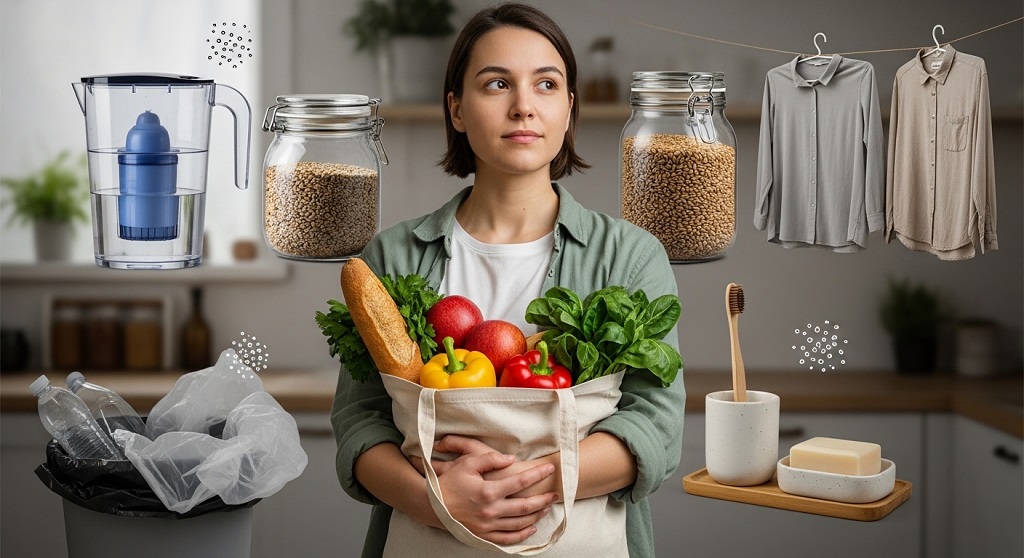
Microplastics are now found in drinking water, food, clothing fibers, indoor air, and even human blood. Most exposure happens silently through daily habits. The good news is that practical lifestyle adjustments can significantly reduce how much plastic enters your body each day.
Contents
What Are Microplastics and Why Should You Reduce Exposure?
Microplastics are tiny plastic particles smaller than 5 millimeters that enter your body through food, water, air, and household products. Long-term exposure may contribute to inflammation, hormone disruption, and toxin accumulation. Reducing everyday contact lowers health risks and limits environmental contamination at the same time.
Snippet Answer (50 words): Microplastics enter your body through drinking water, packaged food, indoor air, and synthetic fabrics. Switching to glass storage, filtering tap water, avoiding plastic heating containers, choosing natural clothing, and improving ventilation can significantly reduce exposure within weeks while also lowering long-term health and environmental risks.
Microplastics form when larger plastic items break down or when synthetic materials shed microscopic fibers. These particles persist for decades. They circulate through oceans, soil, and air.
Research has detected microplastics in lungs, bloodstream, placenta tissue, and digestive organs. Scientists are still studying long-term effects. However, early evidence links exposure to oxidative stress, endocrine disruption, and immune response changes.
The biggest exposure sources are not obvious. Bottled water, plastic cutting boards, synthetic clothing, and packaged foods contribute more than most people expect.
Reducing exposure does not require eliminating plastic completely. Strategic changes create measurable reductions quickly.
How Do Microplastics Enter Your Drinking Water?
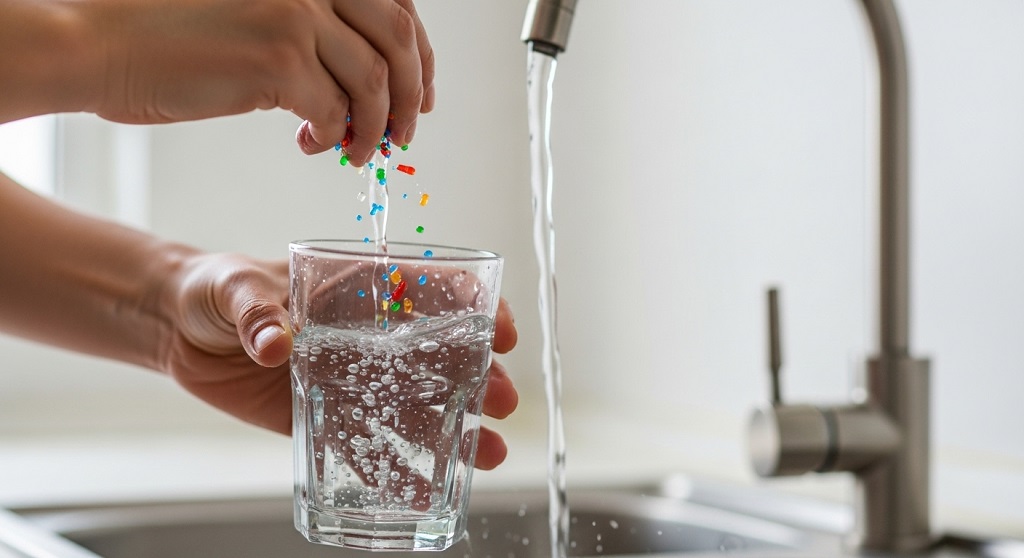
Answer Block: Microplastics enter drinking water through plastic packaging, pipe degradation, wastewater contamination, and airborne particles settling into storage systems. Using filtered tap water, stainless steel bottles, and avoiding bottled water significantly lowers daily ingestion compared with relying on packaged beverages.
Bottled water contains higher microplastic concentrations than filtered tap water in many regions. Manufacturing, packaging, and transportation introduce plastic fragments before consumption.
Even municipal systems contain microplastics. However, household filtration reduces particle intake effectively. Reverse osmosis filters remove the highest percentage.
- Install a reverse osmosis filter
- Use stainless steel or glass bottles
- Avoid storing water in hot plastic containers
- Replace old plastic kettles
Boiling water does not remove microplastics. Filtration remains the most reliable solution.
Switching from bottled water to filtered tap water can reduce ingestion by thousands of particles annually.
Does Heating Food in Plastic Increase Microplastic Intake?
Answer Block: Heating food in plastic containers releases microplastics and chemical additives directly into meals. Microwave heat accelerates polymer breakdown. Replacing plastic containers with glass or stainless steel storage eliminates one of the most preventable sources of dietary microplastic exposure.
Microwaving plastic increases particle migration dramatically. Even “microwave-safe” labels refer to melting resistance, not microplastic release prevention.
Fatty foods absorb more plastic particles than dry foods. High heat increases transfer rates further.
- Replace plastic lunch boxes with glass containers
- Avoid plastic wrap during reheating
- Use ceramic plates in microwaves
- Store leftovers in glass jars
Switching storage materials produces immediate exposure reduction without changing diet quality.
Which Foods Contain the Highest Microplastic Levels?
Answer Block: Seafood, packaged salt, bottled beverages, processed foods, and takeaway meals contain the highest microplastic concentrations. Choosing fresh ingredients, loose produce, and minimally packaged foods significantly reduces ingestion while improving overall nutritional quality.
Marine organisms absorb plastic particles from polluted waters. Shellfish accumulate the highest concentrations because they filter large water volumes.
Processed foods collect microplastics during manufacturing, packaging, and storage. Plastic conveyor belts and packaging films contribute additional contamination.
Simple purchasing adjustments help reduce intake:
- Choose loose vegetables instead of wrapped produce
- Buy bulk grains in paper packaging
- Limit takeaway containers
- Select filtered tap water over bottled drinks
Fresh food preparation lowers both chemical and particle exposure simultaneously.
Do Synthetic Clothes Release Microplastics Into Indoor Air?
Answer Block: Synthetic fabrics such as polyester, nylon, and acrylic shed microplastic fibers during wearing and washing. These particles accumulate in indoor dust and air. Wearing natural fabrics and improving ventilation reduces inhalation exposure significantly over time.
Indoor air often contains higher microplastic levels than outdoor air. Clothing fibers are a primary contributor.
Dryers release millions of fibers per cycle. Washing machines discharge microplastics into wastewater systems.
Reduce exposure with these steps:
- Wear cotton, linen, or wool clothing
- Wash synthetic fabrics less frequently
- Air dry clothes instead of machine drying
- Use microfiber-catching laundry filters
Natural fiber clothing reduces inhalation and environmental pollution simultaneously.
Can Household Dust Increase Microplastic Exposure?
Answer Block: Household dust contains microplastics from carpets, furniture, electronics, and clothing fibers. Regular wet cleaning, vacuuming with HEPA filters, and improving airflow reduces inhalation and ingestion risks, especially for children who have higher dust exposure indoors.
Dust settles on floors, tables, and food preparation areas. Small particles easily enter the body through breathing or hand-to-mouth contact.
Children face greater risk due to proximity to floors and frequent hand contact.
Effective reduction strategies include:
- Vacuum with HEPA filtration weekly
- Use damp cloth cleaning instead of dry dusting
- Open windows daily for ventilation
- Remove shoes indoors
Indoor air improvements quickly lower exposure levels across households.
Are Personal Care Products a Hidden Microplastic Source?
Answer Block: Some cosmetics, scrubs, and toothpaste contain microplastic particles used as texture agents. Choosing products labeled microplastic-free or biodegradable prevents direct skin exposure and reduces environmental contamination entering waterways through household drains.
Microbeads were once common in facial cleansers and exfoliating scrubs. Many countries restricted them, but substitutes still exist in some markets.
Check ingredient labels for:
- Polyethylene
- Polypropylene
- Nylon
- Acrylates copolymer
Switching to natural exfoliants like salt, sugar, or oatmeal eliminates this exposure source entirely.
Which Materials Are Safer Alternatives to Everyday Plastics?
Answer Block: Glass, stainless steel, ceramic, bamboo, and untreated wood provide safer alternatives to plastic in food storage, cooking, and daily household use. Replacing high-contact plastic items first delivers the greatest reduction in long-term microplastic exposure.
Material choice directly affects exposure levels. Prioritizing replacements strategically maximizes impact.
| Material | Microplastic Risk | Best Uses |
|---|---|---|
| Glass | None | Food storage, drinking bottles |
| Stainless Steel | None | Cookware, lunch boxes |
| Ceramic | None | Microwave heating |
| Bamboo | Very Low | Utensils |
| Plastic | High | Temporary storage only |
Replacing frequently heated plastic items delivers the largest exposure reduction quickly.
Conclusion: How Can You Reduce Microplastic Exposure Starting Today?
Microplastic exposure is unavoidable, but daily habits strongly influence how much enters your body. Drinking filtered water, avoiding plastic heating containers, choosing fresh foods, improving ventilation, and switching to natural fabrics all create measurable reductions.
Start with the highest-impact actions first. Replace plastic water bottles. Stop microwaving plastic containers. Vacuum regularly with HEPA filtration. Choose glass storage whenever possible.
Small decisions repeated daily create meaningful health protection over time. These changes also reduce environmental plastic pollution.
Begin with one change this week. Then add another next week. Consistent adjustments build long-term protection for your health and your household.
Frequently Asked Questions
Do microplastics stay in the human body permanently?
Some microplastics leave the body through digestion, but smaller particles may accumulate in tissues. Research is ongoing, and reducing exposure remains the safest strategy.
Is bottled water worse than tap water for microplastics?
Studies consistently show bottled water contains higher microplastic levels than filtered tap water, mainly due to packaging and production contamination.
Can boiling water remove microplastics?
Boiling alone does not remove microplastics. Filtration systems like reverse osmosis are more effective.
Are children more vulnerable to microplastic exposure?
Yes. Children inhale more indoor dust and have higher hand-to-mouth contact, increasing exposure risk compared with adults.
Do tea bags release microplastics?
Some nylon or plastic-sealed tea bags release microplastics during steeping. Loose-leaf tea reduces this exposure.
Does washing clothes release microplastics into the environment?
Synthetic fabrics shed fibers during washing. Using laundry filters and choosing natural fabrics helps reduce pollution.
Is completely avoiding microplastics possible?
No. Microplastics exist in air, water, and soil globally. However, targeted lifestyle adjustments significantly lower exposure levels.
Read More Also: How to Reduce Workplace Injuries with Proper Seating Solutions
Learn More: Who Are the Affiliates for Mabuhay Health Center