A neck hump, often called a dowager’s hump or buffalo hump, can develop from poor posture, extended screen time, or natural aging. This visible bump at the base of the neck affects millions of people worldwide. However, incorporating targeted exercises into your morning routine can significantly improve your posture and reduce the appearance of this condition.
Starting your day with neck hump exercises offers multiple benefits. Morning exercise increases blood flow, wakes up your muscles, and sets a positive tone for the rest of the day. Additionally, addressing posture issues early helps prevent further deterioration throughout your workday.
Contents
Understanding What Causes Neck Humps
Before diving into exercises, understanding the root causes helps you address the problem effectively. Neck humps typically develop from forward head posture, where your head juts forward past your shoulders. This position strains the muscles and can lead to fat deposits or tissue buildup in the area.
Poor posture while using computers, smartphones, or tablets contributes significantly to this condition. When you look down at devices for hours daily, your neck muscles work overtime to support your head’s weight. Over time, this creates muscle imbalances and tissue changes.
According to Cleveland Clinic, factors like osteoporosis, genetics, and certain medical conditions can also contribute to neck hump development. Therefore, consulting a healthcare provider ensures you address any underlying health concerns properly.
Preparing Your Space for Morning Exercises
Creating an ideal exercise environment makes consistency easier. Choose a quiet space where you can move freely without distractions. You need enough room to extend your arms fully in all directions.
Keep a yoga mat or cushioned surface nearby for comfort during floor exercises. Additionally, have a mirror available to check your form and posture. Proper form ensures maximum benefit and prevents injury.
Set out any props you might need the night before. This includes resistance bands, small towels, or foam rollers. Having everything ready eliminates morning excuses and streamlines your routine.
Essential Warm-Up Movements
Never skip warming up before exercises. Cold muscles are more prone to injury and respond less effectively to stretching. Start with gentle neck rotations, moving your head slowly in circular motions for 30 seconds in each direction.
Next, perform shoulder rolls to loosen the upper back area. Roll your shoulders backward ten times, then forward ten times. This movement increases circulation and prepares the muscles for deeper work.
Finish your warm-up with arm circles. Extend both arms out to your sides and make small circles, gradually increasing the size. Continue for one minute total. These movements activate the shoulder girdle and upper back muscles.
Chin Tucks for Neck Alignment
Chin tucks represent one of the most effective exercises for correcting forward head posture. This simple movement retrains your neck muscles and improves alignment throughout the day.
Stand or sit with your spine straight and shoulders relaxed. Look straight ahead, keeping your eyes level. Gently pull your chin straight back, as if creating a double chin. Hold this position for five seconds.
Release slowly and repeat ten times. Focus on the quality of each repetition rather than speed. You should feel a gentle stretch at the base of your skull. This exercise strengthens the deep neck flexors that support proper head position.
Perform chin tucks three times during your morning routine. Space them out between other exercises for maximum effectiveness. Consistency with this movement yields noticeable improvements within weeks.
Wall Angels for Upper Back Strength
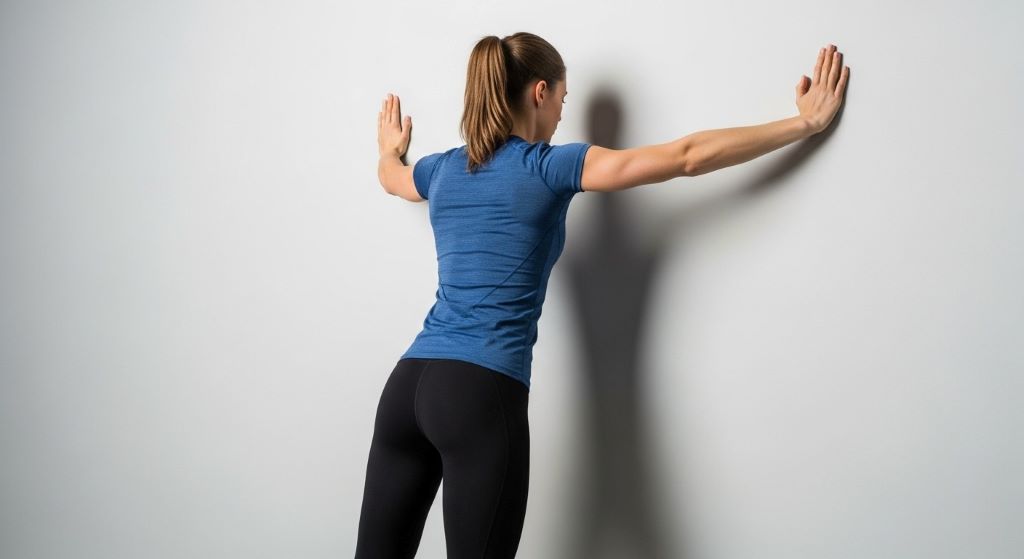
Wall angels target the muscles between your shoulder blades, which often weaken with poor posture. This exercise opens your chest and strengthens your upper back simultaneously.
Stand with your back against a wall, feet about six inches away from the baseboard. Press your lower back, upper back, and head against the wall. Raise your arms to shoulder height with elbows bent at 90 degrees.
Slowly slide your arms up the wall, maintaining contact with the surface. Go as high as comfortable, then return to the starting position. Complete ten repetitions, moving deliberately and controlled.
If keeping everything touching the wall proves difficult, your chest muscles may be tight. Therefore, start with a smaller range of motion and gradually increase as flexibility improves. Wall angels effectively counteract the rounded shoulder position common with desk work.
Prone Cobra Stretch
The prone cobra strengthens the entire posterior chain of your upper body. This exercise specifically targets the muscles that pull your shoulders back and down, opposing the forward hump position.
Lie face down on your mat with arms at your sides, palms facing down. Squeeze your shoulder blades together and lift your chest off the floor. Keep your neck neutral by looking down at the mat.
Rotate your arms so your thumbs point toward the ceiling. Hold this position for 15 seconds, breathing steadily. Lower down and rest for ten seconds, then repeat five times.
As you progress, gradually increase your hold time to 30 seconds. This exercise builds endurance in the muscles responsible for maintaining good posture. Many people feel an immediate improvement in their standing posture after completing this movement.
Doorway Chest Stretches
Tight chest muscles pull your shoulders forward, contributing to neck hump development. Doorway stretches counteract this tightness and promote better shoulder alignment.
Stand in a doorway and place your forearms on either side of the door frame. Step one foot forward into a slight lunge position. Lean forward gently until you feel a stretch across your chest.
Hold for 30 seconds, breathing deeply. The stretch should feel comfortable, never painful. Step back and repeat three times. Additionally, vary the height of your arms to stretch different portions of your chest muscles.
Perform this stretch after strengthening exercises when your muscles are warm. According to Harvard Health Publishing, regular stretching improves flexibility and range of motion, supporting better posture throughout the day.
Scapular Squeezes
Scapular squeezes activate the muscles between your shoulder blades, creating stability and counteracting the hunched position. This simple exercise requires no equipment and takes just minutes.
Sit or stand with good posture, arms relaxed at your sides. Squeeze your shoulder blades together as if trying to hold a pencil between them. Hold for five seconds, then release.
Complete 15 repetitions, focusing on the contraction quality. You should feel the muscles between your shoulder blades working. This exercise can be performed multiple times throughout the day, not just during your morning routine.
Combine scapular squeezes with deep breathing for added benefit. Inhale as you squeeze, exhale as you release. This coordination enhances mind-muscle connection and promotes relaxation.
Creating Your Personalized Morning Routine
Building a sustainable routine requires realistic time management. Start with just ten minutes dedicated to neck hump exercises. As the habit solidifies, gradually increase to 15 or 20 minutes.
Organize exercises in a logical flow. Begin with warm-ups, progress to strengthening movements, and finish with stretches. This sequence prepares your body, challenges it appropriately, then promotes recovery.
Set a consistent time each morning. Whether immediately after waking or following breakfast, consistency reinforces the habit. Place visual reminders like sticky notes or set phone alarms until the routine becomes automatic.
Track your progress with photos taken monthly from the same angle. Visual documentation motivates continued effort when you see improvements. Furthermore, note how you feel throughout the day as your posture improves.
Common Mistakes to Avoid
Many people rush through exercises, sacrificing form for speed. However, controlled movements with proper alignment deliver better results than rushed repetitions. Take your time with each exercise.
Avoid holding your breath during movements. Proper breathing supports muscle function and prevents unnecessary tension. Inhale during the easier portion of each exercise, exhale during the challenging part.
Don’t expect overnight results. Postural changes develop over weeks and months, not days. Patience and consistency matter more than intensity. Additionally, remember that some muscle soreness is normal when starting new exercises, but sharp pain indicates improper form or underlying issues requiring professional attention.
Conclusion
Incorporating neck hump exercises into your morning routine provides a practical solution for improving posture and reducing the appearance of unwanted neck curvature. These simple yet effective movements strengthen weak muscles, stretch tight areas, and retrain your body’s alignment patterns.
Start with basic exercises like chin tucks and wall angels, then gradually add more challenging movements as your strength improves. Consistency proves more important than perfection, so commit to regular practice even if you can only spare ten minutes initially.
Remember that exercise represents just one component of addressing neck humps. Maintain awareness of your posture throughout the day, especially during computer work or phone use. Combined with these morning exercises, conscious posture habits create lasting positive changes in your neck and upper back health.
Frequently Asked Questions
How long does it take to see results from neck hump exercises?
Most people notice improvements in posture and reduced discomfort within four to six weeks of consistent daily practice. However, visible reduction in neck hump size may take three to six months. Results vary based on severity, exercise consistency, and overall lifestyle factors.
Can neck hump exercises completely eliminate the hump?
Exercises can significantly reduce neck humps caused by poor posture and muscle imbalances. However, humps resulting from bone changes, severe osteoporosis, or certain medical conditions may require additional medical interventions. Combining exercises with lifestyle modifications produces the best outcomes.
Should I feel pain during neck hump exercises?
You should feel gentle stretching and muscle activation, but never sharp or severe pain. Mild muscle soreness the day after starting new exercises is normal. If you experience persistent pain, dizziness, or numbness, stop immediately and consult a healthcare professional.
What time of morning is best for these exercises?
Any time that fits your schedule works well. Some prefer exercising immediately after waking to energize their body, while others exercise after showering or eating breakfast. Choose a time you can maintain consistently, as regularity matters more than specific timing.
Do I need special equipment for neck hump exercises?
Most effective neck hump exercises require no equipment beyond a wall and floor space. Optional items like resistance bands, foam rollers, or small towels can enhance certain movements. However, you can build a complete routine using just your body weight and household items.
Related Topics: